






































































































































































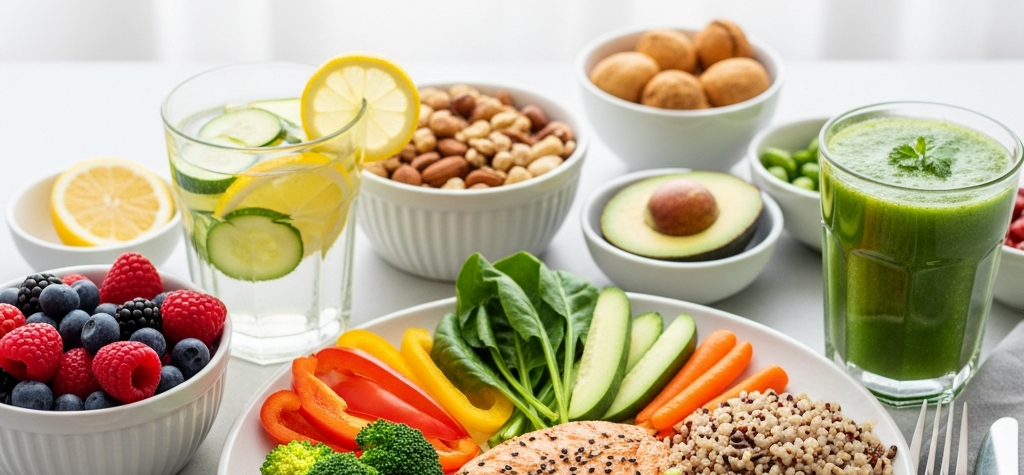
A Holistic Guide to Healthy Weight Loss Eating
Author: RVLNSV PRASAD
Updated On: October 2026
About Us
Author Bio
Editorial Policy
Contact Us

Quick Answer: What Is the Best Way to Eat for Healthy Weight Loss?
The best approach to healthy eating for weight loss is to build a balanced, satisfying eating pattern that you can maintain over time. Include vegetables, fruits, protein-rich foods, whole grains, and healthy fats while paying attention to portions, sugary drinks, and frequent high-calorie snacks.
You do not need to eliminate rice, bread, potatoes, or your favorite foods. Instead, focus on improving the overall quality of your meals and creating an appropriate calorie deficit without sacrificing essential nutrients.
According to the US Centers for Disease Control and Prevention (CDC), healthy weight management involves more than food alone. Physical activity, adequate sleep, stress management, medications, medical conditions, and other individual factors can influence your results.
Key Takeaways
- Choose balanced meals that include protein, fiber-rich carbohydrates, vegetables, and healthy fats.
- Pay attention to portions without assuming that every calorie must be counted forever.
- Replace sugary drinks with water or unsweetened alternatives more often.
- Choose whole fruit more frequently than fruit juice.
- Plan simple meals and snacks before hunger makes decisions harder.
- Avoid extreme diets, unnecessary food restrictions, and supposed fat-burning remedies.
- Make changes gradually so your eating pattern remains practical during busy days.
- Seek professional advice if weight changes unexpectedly or medical conditions affect your diet.
Introduction: Why Healthy Eating for Weight Loss Should Fit Real Life
Many people begin a weight-loss journey with enthusiasm. They remove several foods from their diet, purchase special drinks, follow strict meal schedules, or attempt to eat much less than usual. These changes may appear manageable at first, but maintaining them can become difficult when work, family responsibilities, celebrations, and unexpected events interfere.
The problem is not necessarily a lack of motivation. Sometimes the eating plan itself is too restrictive, expensive, time-consuming, or disconnected from everyday life.
Healthy weight loss eating should make nutritious choices easier, not turn every meal into a test of willpower.
A more practical approach starts with familiar foods and manageable changes. Someone who regularly eats rice can adjust the meal’s proportions and add vegetables and protein. A person who depends on takeaway food can begin by choosing a more balanced option rather than attempting to cook every meal immediately.
The National Institute of Diabetes and Digestive and Kidney Diseases (NIDDK) recommends an eating plan that people can maintain over time. The appropriate plan varies according to individual calorie needs, preferences, health conditions, and activity levels.
This guide explains how to apply those principles to ordinary meals, including Indian vegetarian dishes, quick workday lunches, family dinners, and situations in which a carefully planned day does not go as expected.
1. Understand How Healthy Eating Supports Weight Loss
Weight loss generally occurs when the body uses more energy than it receives from food and drinks over time. This is commonly described as a calorie deficit.
However, this does not mean that all calories affect your eating experience in exactly the same way. Foods differ in their fiber, protein, water content, nutritional value, and ability to help you feel satisfied.
For example, a meal containing vegetables, lentils, and whole grains may provide more fiber and a wider range of nutrients than a meal dominated by refined snacks. The balanced meal may also make it easier to manage hunger between meals.
The CDC’s healthy-eating guidance recommends an eating pattern that emphasizes nutrient-dense foods, including vegetables, fruits, protein sources, whole grains, and dairy or suitable alternatives.
Why extreme restriction can backfire
Eating too little may leave you tired, hungry, irritable, or preoccupied with food. An overly restrictive plan can also make it harder to obtain enough protein, vitamins, minerals, and other essential nutrients.
Weight management is influenced by several factors, including appetite, sleep, stress, medications, age, genetics, and the environment in which you live. Consequently, two people following similar diets may experience different results.
The NIDDK’s guide to obesity treatment describes structured lifestyle treatment and individualized support as important options for people who need help managing their weight.
The practical goal is to improve food quality and portions while maintaining adequate nutrition, rather than pursuing the lowest possible calorie intake.
2. Build a Balanced Plate Without Following a Complicated Diet
A balanced plate is one of the simplest ways to improve healthy eating for weight loss without weighing every ingredient.
For many meals, you can start with the following visual guide. Adjust it according to your appetite, activity, health needs, and dietary preferences.
| Plate component | Practical starting point | Examples |
|---|---|---|
| Vegetables | About half the plate | Spinach, carrots, beans, cauliflower, cabbage, cucumber |
| Protein-rich foods | About one-quarter | Dal, chickpeas, beans, tofu, eggs, fish, chicken |
| Grain or starchy food | About one-quarter | Rice, roti, oats, whole-grain bread, potatoes |
| Healthy fats | A moderate amount | Nuts, seeds, measured cooking oil |
| Drink | Water or an unsweetened option | Plain water, unsweetened tea |
This is a flexible guide, not a rigid prescription. Some people need different proportions because of their activity levels, medical conditions, or nutritional requirements.
The USDA MyPlate resource offers additional guidance for creating balanced meals, while the NIDDK portion guide explains how portions relate to individual energy needs.
How to apply the plate method to Indian meals
You do not have to replace traditional foods with unfamiliar diet products.
Consider a familiar lunch of rice, dal, vegetables, and curd. You might serve a generous portion of vegetables, include a suitable amount of dal or another protein source, and adjust the rice portion to your needs. Curd can contribute protein and calcium, depending on the product.
For a roti-based meal, combine roti with chana, rajma, dal, tofu, or another protein source, then add cooked vegetables or salad.
If you prefer non-vegetarian foods, eggs, fish, and lean poultry can also fit into a balanced eating pattern.
The important consideration is the overall meal, including cooking oil, sauces, added sugar, and portion sizes—not whether a food is labelled as a traditional dish or a diet food.
3. Choose Foods That Help You Feel Satisfied
One of the most useful strategies for sustainable weight loss is to choose meals that provide both nutrition and satisfaction.
A meal that leaves you hungry shortly afterward may make it harder to follow your intended eating pattern. Combining protein, fiber-rich foods, and appropriate portions can help you create more satisfying meals.
Protein-rich foods
Protein contributes to the maintenance and repair of body tissues. Including a protein source in meals can also help some people manage hunger.
Useful choices include:
- Eggs, fish, chicken, and other suitable animal protein sources.
- Lentils, chickpeas, kidney beans, and other pulses.
- Tofu, tempeh, and soy products.
- Plain yogurt and milk or fortified alternatives.
- Nuts and seeds, in portions that suit your energy needs.
You do not necessarily need protein powders or expensive supplements to improve your diet. Ordinary foods can provide protein as part of a varied eating pattern.
Your individual protein requirements depend on factors such as body size, age, activity, and health. People with kidney disease or other conditions affecting protein requirements should consult a qualified healthcare professional before making substantial dietary changes.
Fiber-rich foods
Fiber is found in vegetables, fruits, legumes, and whole grains. Fiber-rich foods can support digestive health and may help you feel fuller.
Examples include oats, beans, peas, lentils, apples, pears, carrots, and whole-grain cereals.
The CDC’s guidance on fruits and vegetables, updated in July 2026, explains that these foods provide fiber, water, vitamins, and minerals and may support weight management.
Increase fiber gradually if your current intake is low, and drink enough fluids unless your healthcare professional has advised you to restrict them.
Healthy fats
Nuts, seeds, olive oil, and other unsaturated-fat sources can contribute important nutrients to a balanced diet. However, their energy content can add up quickly.
You do not need to eliminate fats. Instead, use suitable amounts and consider how they fit into the whole meal.
4. Understand Portion Control Without Obsessing Over Food
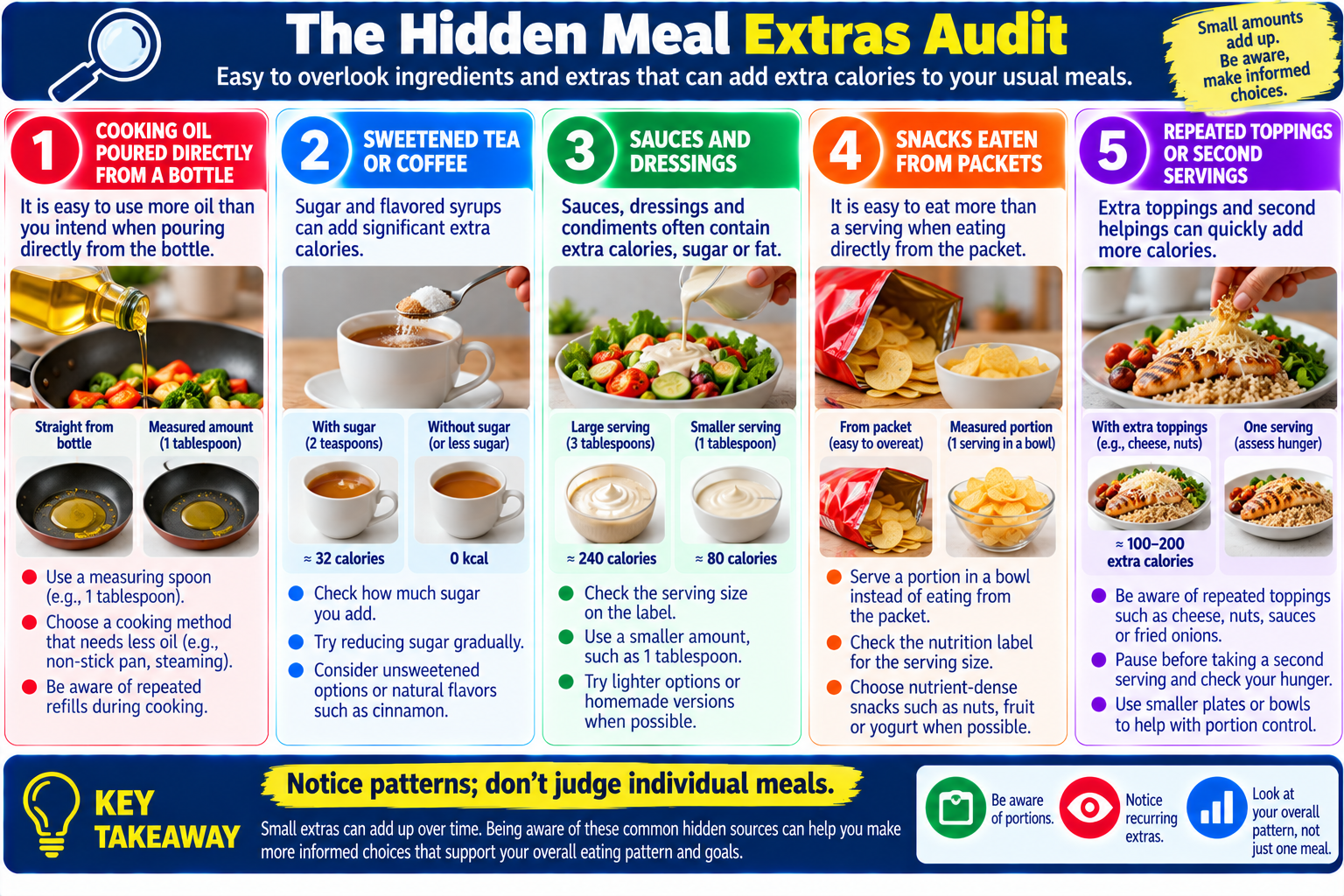
Even nutritious foods can contribute more energy than you need when portions are consistently larger than your requirements. On the other hand, eating too little can leave you hungry and make adequate nutrition difficult.
Portion control is about finding an appropriate amount, not automatically choosing the smallest serving.
| Common situation | A practical adjustment |
|---|---|
| Eating directly from a large packet | Place a reasonable portion in a bowl. |
| Serving rice or pasta without measuring | Start with a familiar portion and adjust according to hunger and progress. |
| Adding oil freely while cooking | Measure the amount used in the recipe. |
| Drinking calories without noticing | Check the frequency and size of sugary drinks or sweetened coffees. |
| Taking a second serving automatically | Pause and assess whether you are still hungry. |
| Eating while distracted | Try eating at a table without a screen when practical. |
The NIDDK’s food-portion guidance recommends practical strategies such as serving food onto a plate, paying attention while eating, and understanding the difference between a serving size and the amount you actually consume.
You do not have to count every calorie indefinitely. Some people find temporary food tracking useful, while others prefer a consistent plate method or simple meal routine. Choose an approach that supports your health without creating unnecessary anxiety.
5. Make Smarter Choices About Carbohydrates
Carbohydrates are not automatically responsible for weight gain. Rice, bread, potatoes, oats, and other carbohydrate-containing foods can be part of a balanced eating plan.
The amount eaten, the overall dietary pattern, and what accompanies these foods matter.
For example, a meal consisting mainly of a large serving of refined grains may offer less fiber and protein than a meal that includes whole grains, vegetables, and pulses. Adding protein and vegetables can improve the meal’s nutritional balance.
Better carbohydrate choices
Consider these practical swaps when they suit your preferences:
| Instead of always choosing | Try more often. |
|---|---|
| Refined breakfast cereal with added sugar | Plain oats with fruit and yogurt |
| Large portions of refined snacks | Fruit, roasted chickpeas, or a suitable portion of nuts |
| Meals containing only rice or bread | Rice or bread with vegetables and protein |
| Fruit juice as the usual fruit option | Whole fruit more frequently |
| Highly refined grains at every meal | A mixture of whole grains and other suitable carbohydrate sources |
These are options, not mandatory substitutions. You can retain familiar foods while improving the overall composition of your meals.
The CDC’s healthy-eating recommendations emphasize whole fruits, vegetables, whole grains, and a variety of protein foods as part of a nutritious eating pattern.
People with diabetes or other conditions affecting blood glucose may need individualized carbohydrate guidance from their healthcare team.
6. Rethink Sugary Drinks and Popular Weight-Loss Remedies
Drinks can contribute energy without providing the same fullness as a substantial meal. Regularly consuming sweetened tea, soft drinks, sweetened coffee, energy drinks, or large quantities of fruit juice may make it harder for some people to manage their total calorie intake.
A simple change is to replace some of these drinks with water or unsweetened alternatives.
The CDC’s guidance on maintaining a healthy weight identifies replacing sugary beverages with plain water as one way to reduce calorie intake.
Do lemon water, ginger tea, or warm water burn fat?
Lemon water, ginger tea, and warm water may be enjoyable beverages. Plain water can support hydration, and unsweetened tea can fit into a balanced eating pattern.
However, there is no good basis for claiming that drinking warm water or lemon water directly melts body fat or that a particular tea reliably produces substantial weight loss on its own.
If you enjoy lemon water, use it because you like the taste. If replacing a sugary beverage with an unsweetened drink reduces your overall calorie intake, that substitution may help support your broader goals.
Do not mistake a convenient drink for a complete weight-management strategy.
Avoid detox teas, unverified fat-burning products, and supplements that promise rapid results. Some may contain undeclared ingredients, interact with medicines, or cause adverse effects.
7. Plan Meals Around Your Actual Schedule
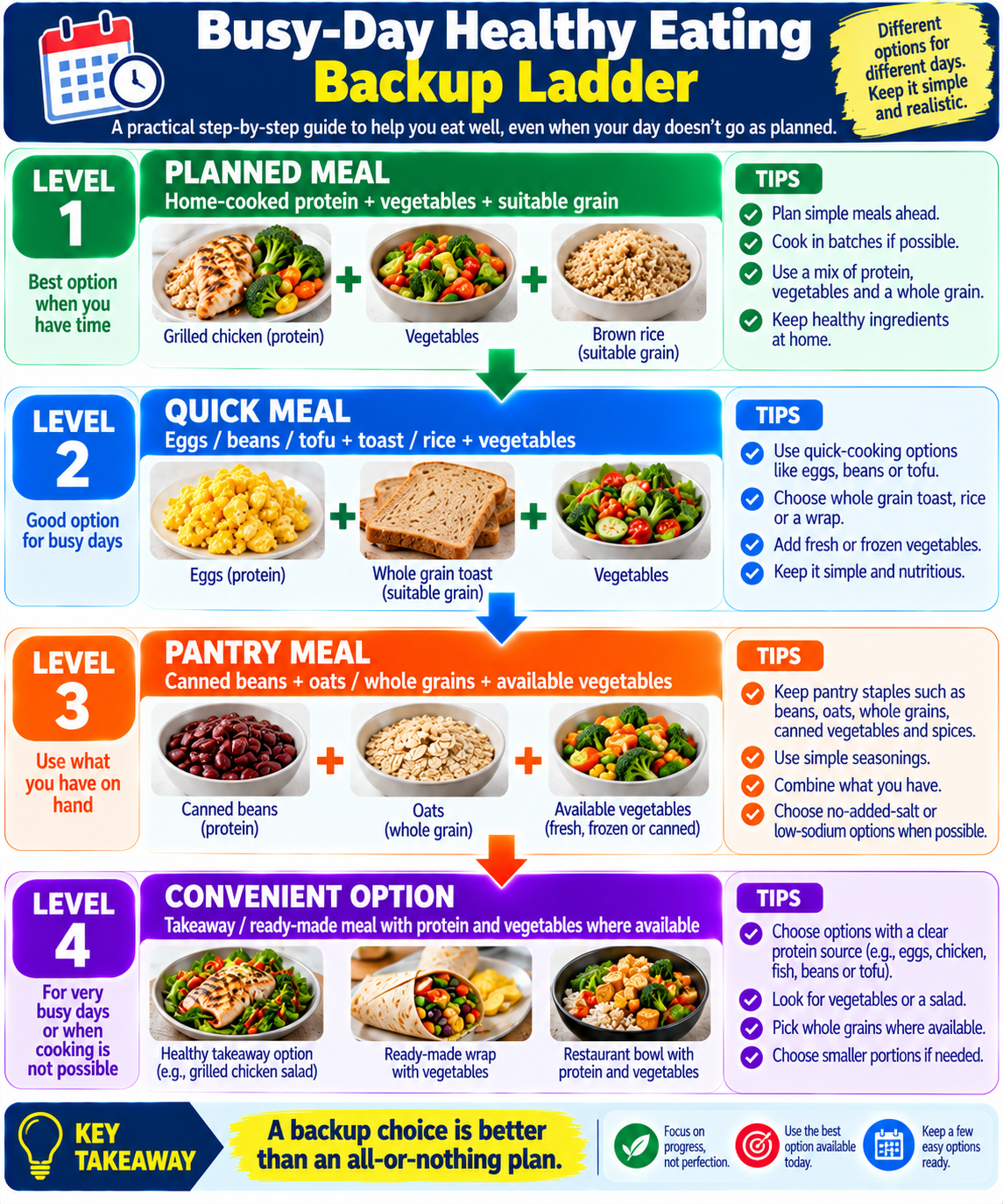
A healthy eating plan must work on ordinary weekdays, not just on days when you have plenty of time.
If preparing a different meal three times a day is unrealistic, use a small collection of flexible meal combinations instead.
Example of a simple daily eating plan
The following table provides ideas, not a prescribed calorie target. Adjust portions, ingredients, and meal frequency to your needs.
| Meal | Example | Why it can be useful |
|---|---|---|
| Breakfast | Oats with plain yogurt and fruit, or eggs with whole-grain toast | Combines protein or dairy with other nutrient sources |
| Lunch | Rice or roti with dal, vegetables, and curd | Uses familiar foods in a balanced combination |
| Snack, if needed. | Fruit with yogurt, roasted chickpeas, or a small portion of nuts | Provides a convenient option between meals |
| Dinner | Vegetable-rich dal, tofu, fish, or chicken with a suitable grain portion | Offers protein alongside vegetables and carbohydrates |
| Drinks | Water, plain tea, or other unsweetened options | Can replace some sugary beverages |
You do not need to eat exactly five times a day. Some people prefer three meals, while others find that a planned snack helps them manage hunger. The most useful schedule is one that fits your needs and reduces the likelihood of becoming excessively hungry.
The CDC’s practical guidance on healthier meals and snacks includes suggestions for choosing protein foods, fruits, vegetables, whole grains, and suitable snacks at home or on the go.
What if you have very little time?
Use a simple fallback meal rather than abandoning your plan completely.
For example, keep suitable frozen vegetables, canned beans, plain yogurt, eggs, oats, or other convenient staples available. Check labels for added sugar and sodium when choosing packaged products.
A quick meal made from ordinary ingredients can be more practical than a complicated recipe you rarely have time to prepare.
8. An Original Strategy: The Meal Rescue Method
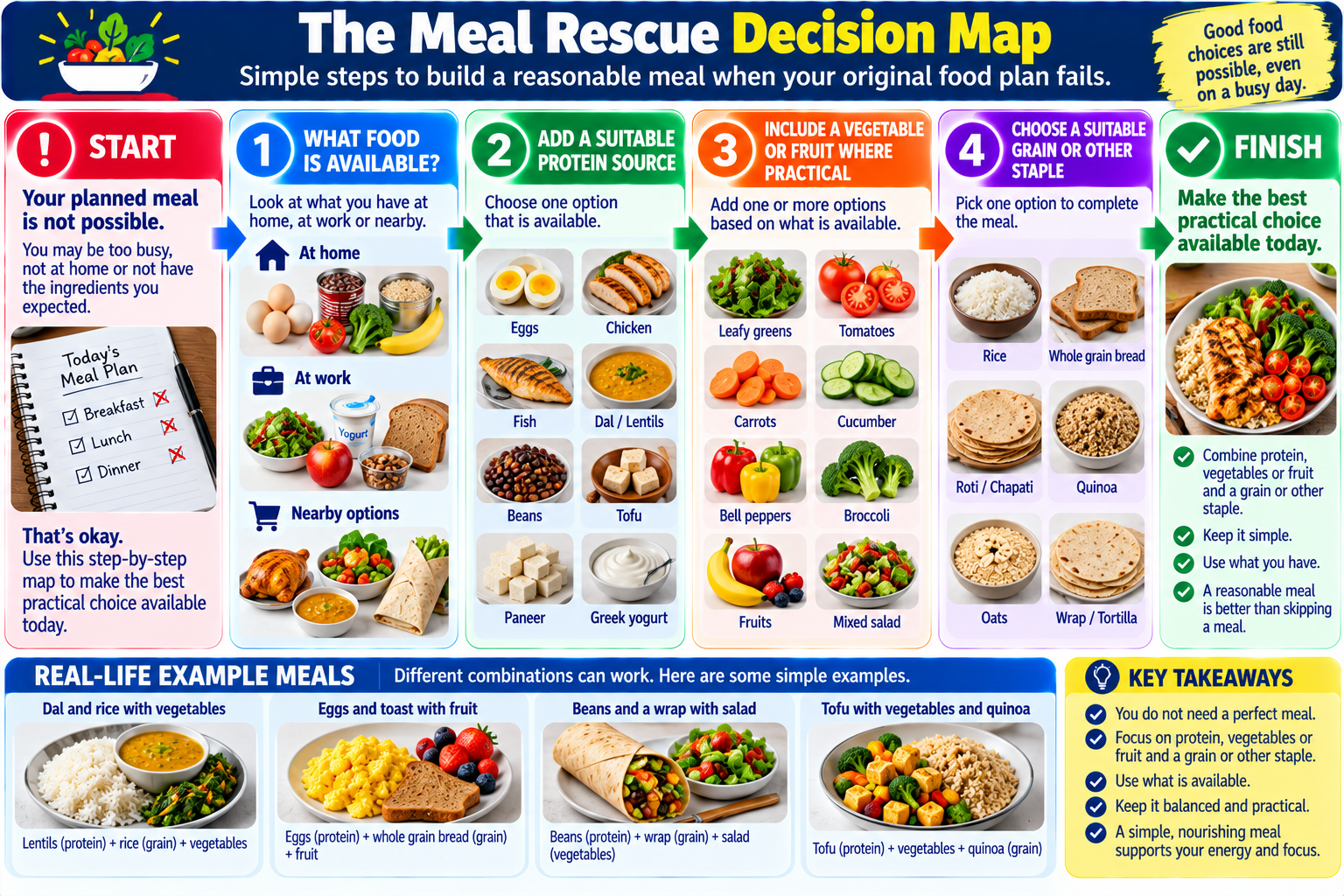
A useful way to make healthy eating for weight loss more realistic is to prepare for the moment when your original plan fails.
Many eating plans focus on ideal meals. Everyday life, however, includes late meetings, travel, unexpected errands, family commitments, and days when cooking is simply not possible.
The Meal Rescue Method is a practical planning technique built around three questions:
- What is likely to disrupt my usual meal?
- What balanced alternative can I access quickly?
- What small preparation would make that alternative easier?
Use the following examples as a starting point.
| Possible barrier | Meal rescue option | Preparation that reduces friction |
|---|---|---|
| You arrive home late. | Dal, frozen vegetables, and a suitable portion of rice | Keep basic ingredients ready. |
| You miss your planned lunch preparation | A suitable bean or chicken wrap with vegetables | Identify a convenient option near work. |
| You feel hungry while travelling. | Fruit, plain yogurt where refrigeration is available, or a suitable packaged snack | Carry an appropriate snack. |
| You have little energy to cook. | Eggs or tofu with vegetables and toast | Keep quick-cooking protein sources available. |
| You attend a family celebration. | Enjoy the meal while choosing portions that suit your needs. | Avoid arriving extremely hungry when possible. |
This method does not guarantee weight loss. Its value is that it gives you a realistic alternative instead of requiring perfect planning every day.
The NIDDK’s adult weight-management guidance recommends practical strategies such as keeping healthier snacks available, planning shopping, and anticipating situations that may affect eating choices.
The key question is not, “How can I follow my plan perfectly?” It is, “What reasonable choice can I make with the time, food, and energy available right now?”
9. Manage Emotional Eating Without Blaming Yourself
Food choices are not determined by hunger alone. Stress, boredom, social situations, fatigue, habits, and emotional experiences can influence what and how much you eat.
Eating for comfort occasionally is a normal human experience. It becomes more difficult when eating regularly feels out of control or becomes the main way you cope with distress.
Try a brief pause before an unplanned snack. Ask yourself whether you are physically hungry, tired, stressed, bored, or responding to a familiar routine.
If you are hungry, eat a satisfying snack or meal. If you are stressed, another option might be a short walk, a conversation with someone you trust, or a few minutes of quiet time. You do not have to ignore hunger or forbid yourself from eating.
Avoid the all-or-nothing trap
Suppose you eat more than intended at lunch. Skipping dinner or exercising excessively to compensate is not necessary.
Return to your usual eating pattern at the next meal. One meal does not determine your long-term progress.
If episodes of overeating feel uncontrollable, cause significant distress, or are followed by purging, fasting, or other compensatory behaviors, seek help from a qualified healthcare professional or eating-disorder specialist.
10. Should You Skip Breakfast or Eat Dinner Early?
Meal timing is often presented as a universal rule for weight loss. In reality, individual needs and eating patterns differ.
Some people find that breakfast helps them manage hunger and concentrate during the morning. Others prefer a later first meal and can maintain a balanced eating pattern without breakfast.
The CDC’s guidance on keeping weight off acknowledges that people may use different approaches to avoid excessive hunger and overeating.
Similarly, eating dinner earlier may suit your schedule or help you avoid uncomfortable late-night eating. However, there is no universal rule that everyone must finish dinner at a particular hour to lose weight.
Consider whether your meal schedule:
- Supports adequate nutrition.
- Fits your work and sleep routine.
- Helps you manage hunger comfortably.
- Allows you to participate in family and social meals.
- Is sustainable without excessive restriction.
People with diabetes, gastrointestinal conditions, or medicines that require food at specific times may need individualized advice about meal timing.
11. Common Healthy Eating Mistakes That Can Slow Progress
Small, repeated patterns may matter more than occasional imperfect choices. The goal is to identify habits that can be changed without making your entire diet unnecessarily restrictive.
| Common mistake | Why it may be unhelpful | A more practical approach |
|---|---|---|
| Cutting out entire food groups without a medical reason | Can reduce variety and make eating plans difficult to maintain | Build balanced meals from foods you enjoy. |
| Treating fruit as forbidden because it contains sugar | May unnecessarily limit fiber and nutrients | Choose whole fruit regularly and consider portions. |
| Assuming all healthy foods can be eaten without regard to portions | Energy intake still matters for weight management. | Pay attention to portions while meeting nutritional needs. |
| Drinking sweetened beverages throughout the day | Can add substantial energy without much fullness | Replace some with water or unsweetened drinks. |
| Depending on detox drinks | Distracts from more useful everyday habits | Focus on meals, drinks, portions, sleep, and activity. |
| Following an extreme calorie restriction | May cause hunger, fatigue, or inadequate nutrition | Choose a moderate, individualized approach. |
| Abandoning the plan after one large meal | Encourages an all-or-nothing mindset | Resume your normal routine at the next meal. |
| Copying another person’s diet exactly | Needs and preferences differ. | Adapt the plan to your circumstances. |
The NIDDK’s advice on choosing a safe and successful weight-loss program recommends realistic goals, a healthy eating plan, support, and a strategy for maintaining results.
If your weight is not changing despite consistent efforts, avoid automatically cutting more food. Review your usual eating pattern, drinks, portions, activity, sleep, medicines, and any health concerns. A registered dietitian or healthcare professional can help identify appropriate adjustments.
12. How Physical Activity, Sleep, and Stress Fit Into Weight Management
Healthy eating is important, but it is not the only influence on weight and overall well-being.
Physical activity
Regular physical activity supports cardiovascular health, muscle function, mobility, and general well-being. It can also contribute to weight management and help maintain weight loss.
Walking, cycling, swimming, dancing, resistance training, and other activities can be useful depending on your abilities and preferences.
The CDC’s weight-loss guidance recommends considering physical activity alongside nutrition, sleep, and stress management.
Start at a level appropriate for your current fitness and increase gradually. People with significant medical conditions, injuries, or exercise-related symptoms should obtain appropriate professional advice before making major changes.
Sleep
Insufficient or irregular sleep can affect appetite, energy, mood, and the ability to maintain healthy routines. A consistent bedtime and wake time may make daily eating and activity habits easier to manage.
For adults, the appropriate sleep duration varies, although many adults generally need at least seven hours per night. Individual needs can differ.
Stress management
Stress may influence eating choices, sleep, and motivation. Simple coping strategies include taking short breaks, maintaining social connections, practicing relaxation, or spending time outdoors.
These habits do not directly guarantee weight loss. They support the broader conditions that can make healthy routines easier to maintain.
13. How to Track Progress Without Focusing Only on the Scale
Body weight naturally fluctuates. Changes in hydration, digestion, salt intake, hormonal cycles, and other factors can affect the number on the scale from day to day.
If weighing yourself is comfortable and appropriate for you, consider looking at longer-term patterns rather than reacting to every small change. Some people may find weekly measurements useful, while others prefer to track behaviors or work with a healthcare professional.
You can also monitor progress through practical indicators such as
- Preparing balanced meals more often.
- Including vegetables and protein in regular meals.
- Replacing some sugary drinks with unsweetened options.
- Feeling more confident about portion choices.
- Maintaining activity and sleep routines.
- Finding it easier to plan meals during busy days.
The CDC’s guidance on losing weight emphasizes realistic goals and gradual progress rather than unrealistic short-term targets.
Progress should not come at the expense of adequate nutrition, mental well-being, or normal daily functioning. If tracking food or weight creates anxiety, obsessive behaviors, or disordered eating, consider a less number-focused approach with professional guidance.
14. A Simple Seven-Day Healthy Eating Action Plan
You do not need to change everything in one week. Use the following plan to practice one manageable improvement at a time.
| Day | Practical action |
|---|---|
| Day 1 | Observe your usual meals and drinks without judging yourself. |
| Day 2 | Add a vegetable to one meal that usually contains very little. |
| Day 3 | Include a suitable protein source in breakfast or lunch. |
| Day 4 | Replace one regular sugary drink with water or an unsweetened alternative. |
| Day 5 | Prepare one convenient meal or snack for a busy day. |
| Day 6 | Practise serving a suitable portion and eating without unnecessary distractions. |
| Day 7 | Review which changes felt realistic and choose two to continue. |
This is a habit-building exercise, not a seven-day weight-loss challenge. Your body may not show a measurable weight change during this period, and that does not mean the effort was wasted.
After the first week, repeat the habits that fit your life and adjust the ones that did not work. If you need to lose weight for health reasons, a longer-term plan and professional support may be appropriate.
15. When to Seek Professional Advice
General healthy-eating guidance does not replace individualized medical care.
Speak with a qualified healthcare professional or registered dietitian if:
- You have diabetes, kidney disease, significant digestive problems, or another condition that affects your nutritional needs.
- You take medication that may influence weight, appetite, blood glucose, or meal timing.
- You experience unexplained weight gain or weight loss.
- You are pregnant, breastfeeding, underweight, or recovering from an illness.
- You have a history of an eating disorder or find that dieting triggers harmful behaviors.
- You are considering a very-low-calorie diet, weight-loss medication, or supplements marketed for fat loss.
People living with obesity may benefit from structured, evidence-based treatment rather than relying on dietary changes alone. Depending on individual circumstances, treatment can include nutrition counseling, behavioral support, medication, or other clinically appropriate options.
The NIDDK treatment guide explains that treatment should be suited to the person’s needs and health circumstances.
Frequently Asked Questions
1. What is the best diet for healthy weight loss?
There is no single diet that works best for everyone. Choose an eating pattern that provides adequate nutrients, supports an appropriate calorie intake, fits your preferences, and can be maintained over time. A balanced diet may include vegetables, fruits, whole grains, protein-rich foods, and suitable fats.
See the NIDDK guide to eating and physical activity for weight management.
2. Can I eat rice and still lose weight?
Yes. Rice can fit into a weight-management plan. Pay attention to your portion, and consider pairing rice with vegetables and protein-rich foods such as dal, beans, tofu, eggs, fish, or chicken.
You do not have to eliminate a familiar staple simply because you want to lose weight.
3. Which foods help with sustainable weight loss?
Vegetables, whole fruits, legumes, whole grains, and suitable protein sources can help form satisfying, nutrient-rich meals. The best choices are foods you enjoy, can access, and can prepare consistently.
No individual food guarantees fat loss.
4. Is drinking lemon water good for weight loss?
Lemon water can be a refreshing, low-calorie drink when prepared without added sugar. Replacing sugary drinks with it may reduce calorie intake, but lemon water itself does not reliably burn body fat.
5. Do I have to eat breakfast to lose weight?
No universal breakfast rule applies to everyone. Some people find breakfast helpful for hunger management, while others prefer a later first meal. Your overall eating pattern, nutritional adequacy, and ability to manage hunger matter more than following a rigid schedule.
6. Can I lose weight without counting calories?
Some people manage their weight using balanced plates, appropriate portions, regular meals, and changes to drinks and snacks without formally counting calories.
Others find tracking helpful for a limited period. Choose a method that supports your health and does not cause unnecessary stress.
7. Why am I not losing weight despite eating healthy foods?
Healthy food choices are valuable, but weight change also depends on portions, overall energy intake, activity, sleep, medicines, health conditions, and other individual factors.
Consider reviewing your routine over time rather than judging it by a single day. A healthcare professional can help assess possible barriers and recommend suitable next steps.
8. Are snacks allowed during weight loss?
Yes. Snacks can fit into a balanced eating pattern when they suit your hunger, schedule, and nutritional needs. Fruit, plain yogurt, roasted chickpeas, or suitable portions of nuts are examples. You do not need to snack if you are not hungry.
9. Is eating dinner late responsible for weight gain?
Eating late does not automatically cause weight gain. However, some people find that late-night eating is associated with frequent snacking, large portions, or disruption to sleep. Consider your overall eating pattern and whether your schedule supports comfortable digestion and adequate nutrition.
10. How can I maintain my weight after losing it?
Continue the habits that helped you establish a balanced eating pattern. Plan for busy days, maintain suitable physical activity, and adjust your approach as your needs change. Ongoing support can be useful because maintaining weight loss can be challenging.
The CDC’s guide to keeping weight off provides additional practical recommendations.
Author Note
Author: RVLNSV PRASAD
This article aims to make healthy weight management easier to understand through practical meal examples, everyday strategies, and evidence-based guidance. It is intended for general educational purposes and should be adapted to individual nutritional needs, cultural preferences, food availability, and health circumstances.
For publication, add any genuine qualifications, relevant professional experience, or documented editorial review details that apply. Do not claim clinical expertise or personal client results unless they can be verified.
Medical Disclaimer
This article is for educational purposes only and does not replace medical advice, diagnosis, or treatment. Individual calorie, protein, and nutrient requirements vary. Consult a qualified healthcare professional before making substantial dietary changes if you have a medical condition, take medication, are pregnant or breastfeeding, or have concerns about your weight. Seek professional guidance before using weight-loss supplements or restrictive diets.
Fitness Disclaimer
Physical activity should be appropriate for your current fitness, mobility, and health. Begin gradually if you are inactive and increase activity according to your abilities. People with existing injuries, cardiovascular conditions, or other relevant medical concerns should consult a healthcare professional about suitable exercise. Stop and seek appropriate medical advice if activity causes concerning symptoms.
Sources
- Centers for Disease Control and Prevention (CDC): Steps for Losing Weight
- CDC: Tips for Healthy Eating for a Healthy Weight
- National Institute of Diabetes and Digestive and Kidney Diseases (NIDDK): Eating and Physical Activity to Lose or Maintain Weight
- NIDDK: Food Portions: Choosing Just Enough for You
- NIDDK: Health Tips for Adults
- NIDDK: Choosing a Safe and Successful Weight-Loss Program
- USDA MyPlate: Build a Healthy Eating Pattern
- CDC: Tips for Keeping Weight Off
Conclusion: Make Healthy Eating Work for Your Life
Healthy eating for weight loss is not about finding one perfect food, avoiding every carbohydrate, or following a complicated schedule. It is about developing an eating pattern that provides adequate nutrition while helping you manage portions and maintain habits over time.
Start with the meals you already eat. Add vegetables where practical, include suitable protein sources, choose fiber-rich foods more often, and review the drinks and snacks that make up your usual routine. Prepare a simple alternative for days when your original plan becomes difficult.
You do not need to change every habit at once. Choose a few manageable improvements, observe how they fit your life, and build from there.
The most useful eating plan is not the one that looks perfect on paper. It is the one that supports your health and remains realistic in everyday life.
Similar Content
- Weight loss Category
- 6 Mindfulness Practices for Mental Well-being: A Path to Inner Peace and Emotional Resilience
- 4 Week Diet Plan for Weight Loss
- 6 Tips To How To Maintain A Healthy Weight ?
- Healthy Eating Meal Plan for Wellness
- Best Weight Loss Nutrition










[…] A Holistic Guide to Healthy Weight Loss Eating […]
[…] A Holistic Guide to Healthy Weight Loss Eating […]
[…] A Holistic Guide to Healthy Weight Loss Eating […]
[…] A Holistic Guide to Healthy Weight Loss Eating […]
[…] A Holistic Guide to Healthy Weight Loss Eating […]
[…] A Holistic Guide to Healthy Weight Loss Eating […]
[…] A Holistic Guide to Healthy Weight Loss Eating […]
[…] A Holistic Guide to Healthy Weight Loss Eating […]